Aqara FP2 vs mmWave Ceiling Sensors for Small Bathroom Automation
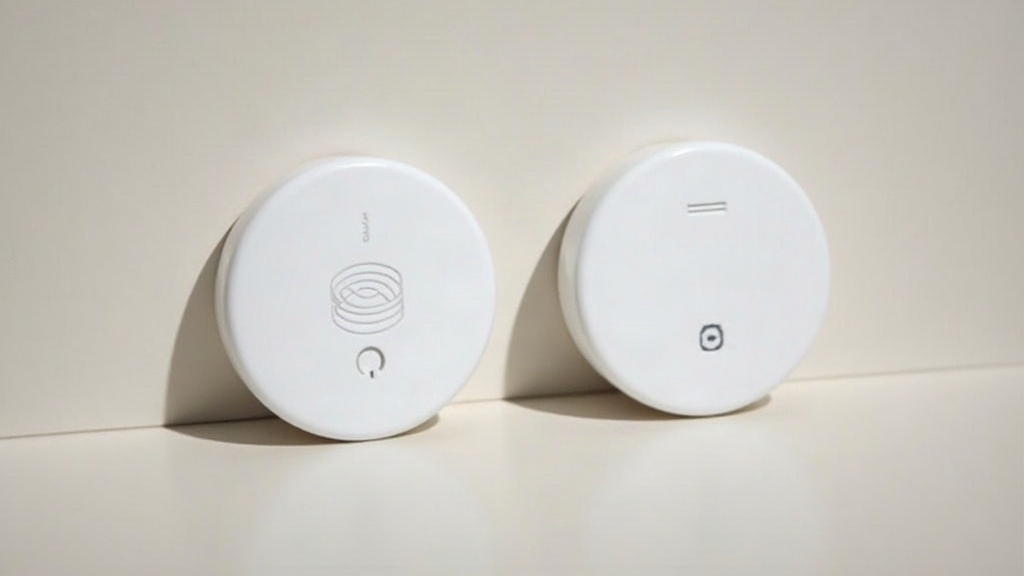
If you’ve ever had a bathroom light cut out mid-shower because some motion sensor lost track of you just standing there, you already get why presence detection beats motion detection, hands down. This guide pits the Aqara FP2 against generic mmWave ceiling sensors for small bathroom automation specifically, covering accuracy, installation, privacy, and real-world reliability, so you can actually pick the right one instead of guessing and returning boxes.
Why Bathrooms Need Presence Sensors, Not Motion Sensors
Standard PIR motion sensors detect movement. Not stillness. That distinction matters a lot in a small bathroom: someone sitting, showering, or just standing at the mirror can look “absent” to a PIR sensor within 30 to 60 seconds, and suddenly the lights or fan shut off on their own.
mmWave radar sensors get around this by picking up on micro-movements, things like breathing and tiny shifts in posture, which lets them register true “presence” rather than plain “motion.” Both the Aqara FP2 and dedicated mmWave ceiling units run on this same tech. The implementation, though, is a different story.
Aqara FP2: Wall or Corner-Mounted Presence Sensor
The Aqara FP2 is a compact unit meant for wall or corner mounting (not the ceiling) that runs 60GHz mmWave radar and supports up to 30 interaction zones per room.
Strengths for bathrooms:
- Multiple zone detection: you can carve out separate zones for the shower area, the sink, and the toilet, each one triggering its own automation.
- Runs through the Aqara Home app with adjustable sensitivity and range (up to 5m x 5m coverage, plenty for most small bathrooms).
- Edge-case handling has gotten noticeably better since the 2023 firmware updates, cutting down on false negatives when someone’s sitting still in a bathtub.
- No subscription needed. Works locally through Aqara hubs with HomeKit, Google Home, and Alexa support via Matter.
Limitations:
- Corner or wall mounting means line-of-sight is everything. Shower curtains, glass doors, tall vanity units, any of these can create blind spots.
- The puck-shaped housing is a bit bulkier, and some people find it less discreet than a flush ceiling unit.
- In bathrooms smaller than 1.5m x 2m, radar reflecting off tiled walls can cause a little jitter in zone reporting now and then.
Generic mmWave Ceiling Sensors
These are usually round, flush-mount modules (think Everything Presence, Tuya-based mmWave pucks, or Aqara’s own in-ceiling versions) installed right above the shower or in the middle of the room.
Strengths for bathrooms:
- Top-down detection sidesteps the blind spots that shower doors, curtains, or furniture create, which makes it a natural fit for enclosed shower stalls.
- The flush install blends into the ceiling, which counts for a lot in a small, visually busy bathroom.
- A lot of these models pair mmWave with a light or humidity sensor in one housing, handy for fan automation (say, auto-exhaust-on when humidity spikes).
Limitations:
- You need ceiling access and wiring (or a battery swap in a spot that’s annoying to reach), which makes retrofitting harder than slapping an FP2 on the wall.
- Zone customization tends to be more limited. Plenty of budget models only report a binary occupied/unoccupied state instead of Aqara’s finer-grained zones.
- Integration quality swings wildly by brand. Tuya-based units often lean on the cloud unless you flash them with Tasmota or ESPHome.
Head-to-Head Comparison
| Factor | Aqara FP2 | Generic mmWave Ceiling Sensor |
|---|---|---|
| Mounting | Wall/corner | Ceiling flush-mount |
| Zones | Up to 30, highly customizable | Often single zone (varies by brand) |
| Blind spots | Possible behind glass/curtains | Minimal, top-down coverage |
| Install difficulty | Easy (surface mount) | Moderate-to-hard (ceiling wiring) |
| Local control | Yes (with Aqara hub) | Varies, often cloud-dependent |
| Price | ~$60-70 | $30-90 depending on brand |
| Best for | Multi-zone small bathrooms with hub ecosystem | Enclosed showers, humidity-triggered fans |
Which Should You Choose?
- Go with the Aqara FP2 if you’re already in the Aqara, HomeKit, or Home Assistant ecosystem and want precise zone-based automation (mirror lights at the sink, a different brightness level in the shower zone) without touching your ceiling.
- Go with a ceiling-mounted mmWave sensor if your bathroom has a glass shower enclosure or a curtain that would block a wall sensor’s view, or if you want humidity-triggered fan control baked into one discreet unit.
- Combine both in bigger layouts: FP2 covering the general room zones, a ceiling sensor dedicated to the shower stall. That combo gets you close to zero false negatives.
Privacy Considerations
Unlike cameras, mmWave radar doesn’t capture images, which makes it a reasonable fit for a private space like a bathroom. Even so, it’s worth checking whether your sensor processes data locally (the Aqara FP2 with a local hub does) or leans on the cloud (common with unbranded Tuya units), especially if privacy is something you actually care about.
Conclusion
For most small bathrooms, the Aqara FP2 hits the best balance of accuracy, zone customization, and ecosystem fit, particularly if you’re already living in the Aqara or HomeKit world. That said, if your layout includes an enclosed shower, or you just want an install that’s practically invisible, a dedicated ceiling-mounted mmWave sensor might actually do better. Look at your room’s layout and whatever hub you’re already running before you buy. The “best” sensor, really, is just the one whose mounting position lines up with your bathroom’s actual blind spots.